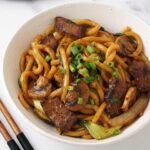
Beef Udon Stir Fry Recipe
Stir fry beef steak with udon noodles, vegetables and flavourful stir fry sauce with Japanese mirin. Super fast and easy to make at home with minimum ingredients. Perfect for quick lunch or light dinner.
Servings: 4
Calories: 709kcal
Ingredients
- 250 g Beef steak ( around 8.8 oz ) ( ribeye, sirloin, rump or any tender steak ) cut in thin slices
- 400 g Udon noodles ( around 14 oz ) See details in note
- 2 head Pak choi ( Or bok choy/choy sum ) Cut lengthwise or thin slices
- 100 g Mushroom ( around 3.5 oz ) ( button, shiitake, white or oyster mushroom ) cut thin slices
- 1 tbsp Garlic Finely chopped
- 1 Onion Cut thin slices
- 2 Spring onions Cut thin slices
- 2 tbsp Vegetable oil or neutral flavour oil
Stir Fry Sauce
- 2 tbsp Mirin ( Japanese rice cooking wine ) or Shaoxing wine
- 2 tbsp Light soy sauce Or regular soy sauce
- 1 tbsp Dark soy sauce
- 1 tbsp Sugar
- 1 tsp Sesame oil
- ½ tsp Corn starch
Instructions
- Blanch the udon noodles with hot water for 1-2 minutes to loosen them. Drain and rinse with cold water and set it aside. ( Or prepare by the packet instructions. Make sure not to overcooked as you are stir frying them again. )
- Mix all the sauce ingredients in a bowl, whisk and set it aside. Cut the beef into thin slices against the grain. Season with 1 tablespoon of stir fry sauce mix. Gather and prepare the vegetables.
- Heat the large pan or wok to medium-high heat, add 2 tablespoon of oil, stir fry the beef slices for 2-3 minutes. Push the beef to one side, add garlic and onion slices and stir for few seconds and follow with the mushroom. Cook for another 1 minute, then add the pak choi and toss it well.
- next place the udon in the middle of the pan, pour the sauce mixture in. Cook for another 2 minutes until the sauce and other ingredients combine evenly.
- Turn off the heat and sprinkle chopped spring onions. Transfer to serving plate and serve immediately.
Notes
- Udon Noodles - If you use pre-cooked or ready-to-use udon noodles, add hot boiling water over the noodles let it sit for 1-2 minutes. Then rinse with cold water. If you use fresh or frozen noodles, follow the packet instructions. To prevent the noodles from overcooked, rinse with cold water after boiling.
Instead of udon, you can swap with any thick egg or wheat noodles. - Steak - Use chicken, prawns/shrimp, or pork instead of beef steak.
- Vegetables - Other stir fry vegetables can be added or substituted. If you use hard vegetables like broccoli or tender stem broccoli, blanch them in hot water for few minutes before adding to stir fry.
- Mirin - Mirin is a Japanese sweet cooking rice wine, similar to sake. If you cannot get mirin, substitute with Chinese Shaoxing wine or dry sherry. For halal or non-alcohol cooking, you can use rice vinegar and a dash of sugar as substitutes.
- Salt & Pepper - As soy sauces already consist of salt intake, we don't usually add salt in this recipe. But you can make a taste test and add some salt or black pepper according to your taste.
- Adjust sugar - If you prefer your sauce sweeter, add extra sugar or adjust to your preference.
Nutrition
Calories: 709kcal | Carbohydrates: 121g | Protein: 32g | Fat: 16g | Saturated Fat: 8g | Polyunsaturated Fat: 1g | Monounsaturated Fat: 2g | Sodium: 2730mg | Potassium: 1827mg | Fiber: 15g | Sugar: 30g | Vitamin A: 25796IU | Vitamin C: 269mg | Calcium: 619mg | Iron: 5mg
